Butterfly Education and Awareness Day (BEAD) is an annual event that falls on the first Saturday in June, organized by the Association for Butterflies (AFB) – a non-profit dedicated to the welfare of butterflies through conservation, research, education, and support for butterfly farmers. You can find them over at afbeducation.org.
The AFB created BEAD to raise public awareness about the benefits and necessity of butterfly conservation and to help to promote the importance and joy of butterfly gardening and looking after their habitats.
The hope is that one dedicated day each year will inspire more families, classrooms and communities to get involved in protecting these remarkable creatures.
Butterflies aren’t just beautiful, they play a crucial role in our ecosystems – helping with pollinating fruits, vegetables and flowers, and serving as a food source for other creatures in the food chain.
BEAD is a reminder that butterflies have a very important role to play and that your little learners can be part of protecting them!
Why Is Butterfly Education and Awareness Day Special?
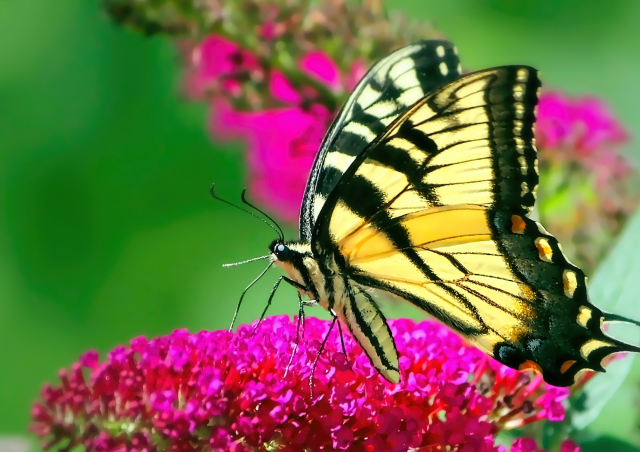
The idea that a wiggly little caterpillar can vanish inside a chrysalis and emerge as a beautiful butterfly is pretty much magic! When I worked in the classroom, we got caterpillars every year, watched them change and released the butterflies, and it was one of my favorite times of the whole year! Watching your little ones’ faces as the butterflies tickled their hands before flying off was just amazing!
BEAD gives that moment of wonder a purpose. It helps children understand that these creatures matter, that they are in need of our care and that the choices we make (like planting the right flowers or cutting back on pesticides) have real consequences for the natural world.
Learning Opportunities
Butterfly Education and Awareness Day can be a wonderful time to help your little learners explore how living things grow and change, how gardens support wildlife, and how we can care for nature in small ways that even the littlest learners can do!
It’s also perfect for building early language, observation, and “let’s be calm and look closely” skills.
Here are a few key areas children can explore:
Life Cycles & Growing Up
Butterfly metamorphosis is one of the clearest (and most magical) examples of a life cycle.
Your children can explore the idea that living things change over time: egg → caterpillar → chrysalis → butterfly. This supports early science understanding, sequencing and can give children a concrete framework for understanding change, time, and growth. And it’s also a comforting theme for young children who are learning about change in their own lives.
You can pair this with sequencing activities and ordering language: first, then, next, finally. It’s an easy scaffold into structured retelling and early writing. These butterfly life cycle cards could work well here!
Butterflies as Pollinators
This day is a great moment to connect butterflies to gardens.
Your children can learn that butterflies visit flowers for nectar, and they’re among the most important pollinators in our ecosystems.
Explaining pollination can be straightforward: when a butterfly sips nectar from a flower, tiny grains of pollen stick to its legs and body, and those grains get carried to the next flower the butterfly visits. That helps plants reproduce and grow fruit and seeds.
A simple “pretend to be a butterfly” movement game – flying from flower to flower, picking up “pollen” (yellow playdough blobs or pom-poms) and dropping them at the next stop can help make this idea concrete and memorable.
Conservation
BEAD carries a real conservation message: that butterflies need certain flowers and plants to survive, and that actions like planting the right flowers or not using pesticides can help them.
Circle time conversations about what we can do, or a simple classroom pledge, can build empathy and the feeling that they can make a difference to the world.
Symmetry and Patterns
Butterfly wings are a beautiful, naturally occurring introduction to symmetry. A simple prompt like “Do both wings match?” leads naturally into thoughts of same and different, shape and talking about pattern.
Did You Know?
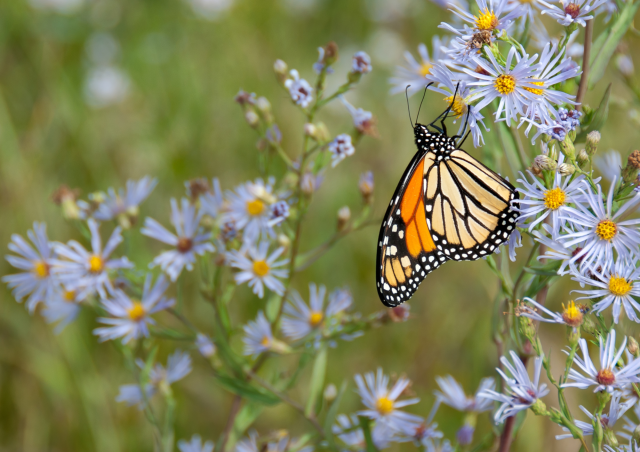
Here are a few fun butterfly facts to share with your little learners:
Butterflies taste with their feet. Butterflies don’t have mouths that bite and chew. Instead, they sip nectar through a long, straw-like tube, and do most of their tasting through their feet, wings, and antennae instead!
A caterpillar can grow over 100 times its original size. A caterpillar’s main job is to eat, and it does it well. During the larval stage, it can grow to more than 100 times the size it started at, shedding its skin several times along the way!
Butterfly wings are covered in thousands of tiny scales. Those brilliant colors come from hundreds of thousands of microscopic scales, overlapping like tiles on a roof. Each one is no bigger than a speck of dust!
Monarch butterflies travel nearly 3,000 miles to Mexico. Every year, monarchs make one of the most spectacular journeys in the animal kingdom, and up to a billion of them arrive in the mountains of Mexico each year. Wowzers!
Butterflies have been around for over 100 million years. The earliest butterflies may have fluttered alongside dinosaurs like Triceratops and T. rex, and pictures of them are even carved into ancient Egyptian tombs!
Learn About Butterflies Day Jokes
A butterfly theme day feels even more fun when your little learners get to laugh along with it. Here’s a few butterfly themed jokes you may want to share with your little ones:
- What do you call a butterfly that can fly faster than all the others? A betterfly!
- What did the butterfly say
when it got in trouble? “I butter-fly away”. - Why didn’t the butterfly go to the dance? It was a moth ball.
- What do you call a butterfly who’s passing you? A flutterby!
- What’s the opposite of Butterfly? Margarine-walk.
Butterfly Education and Awareness Day Printable Activities

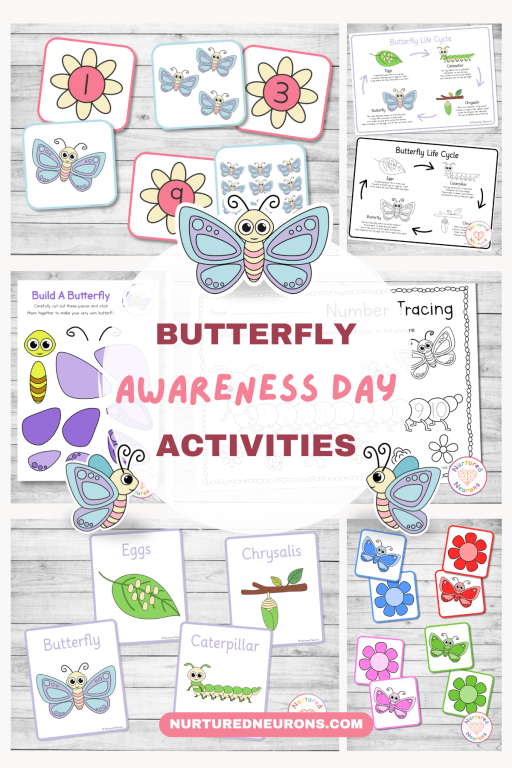
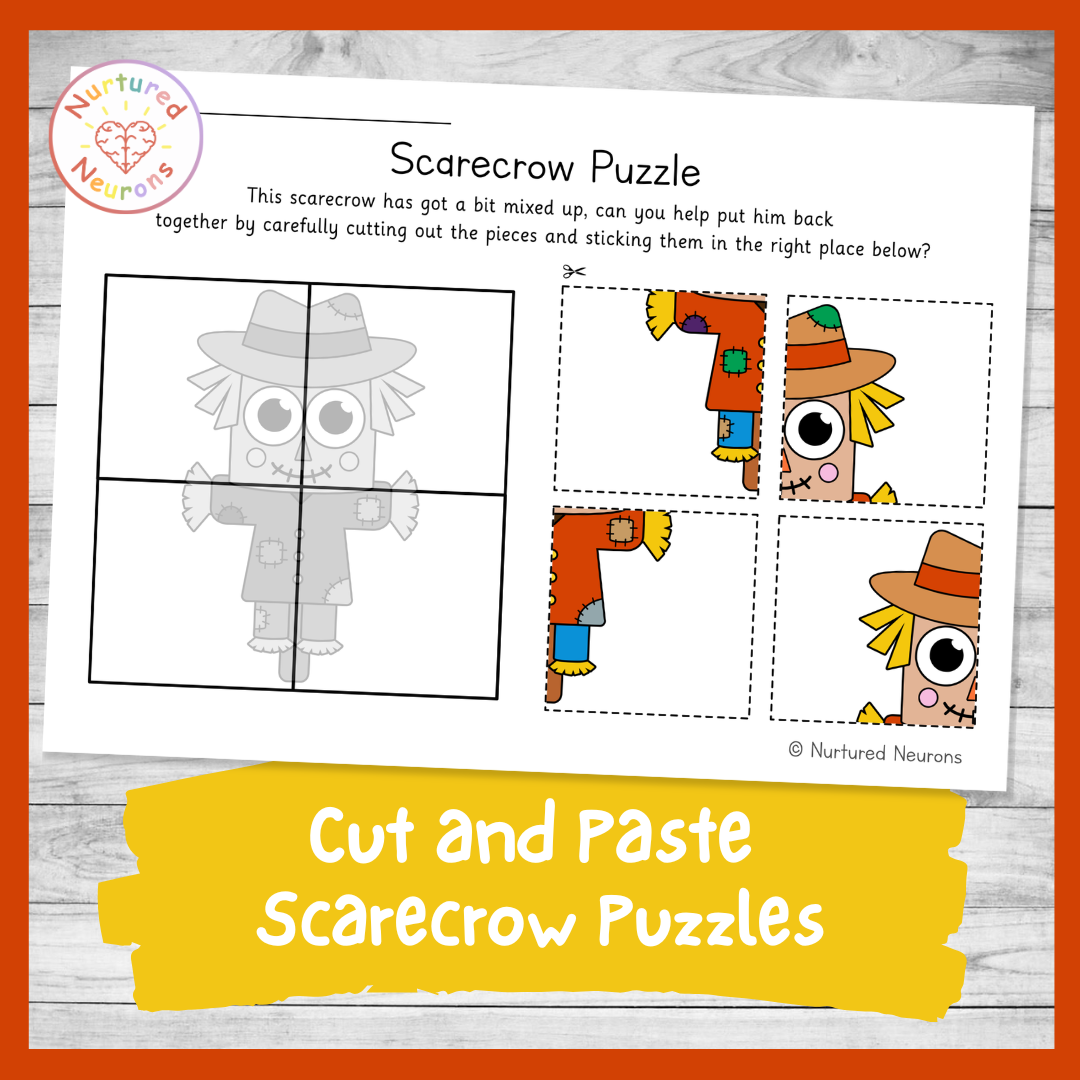
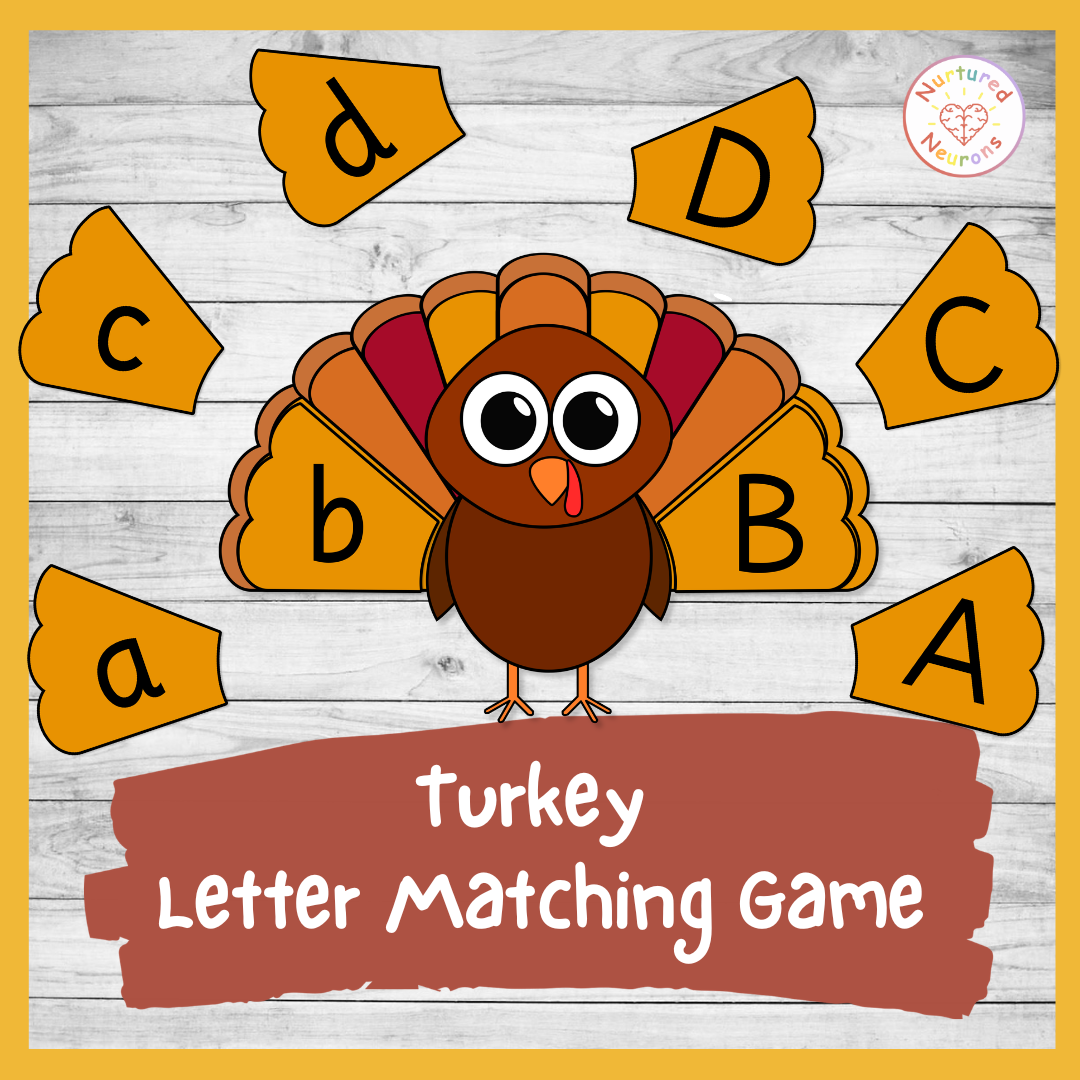
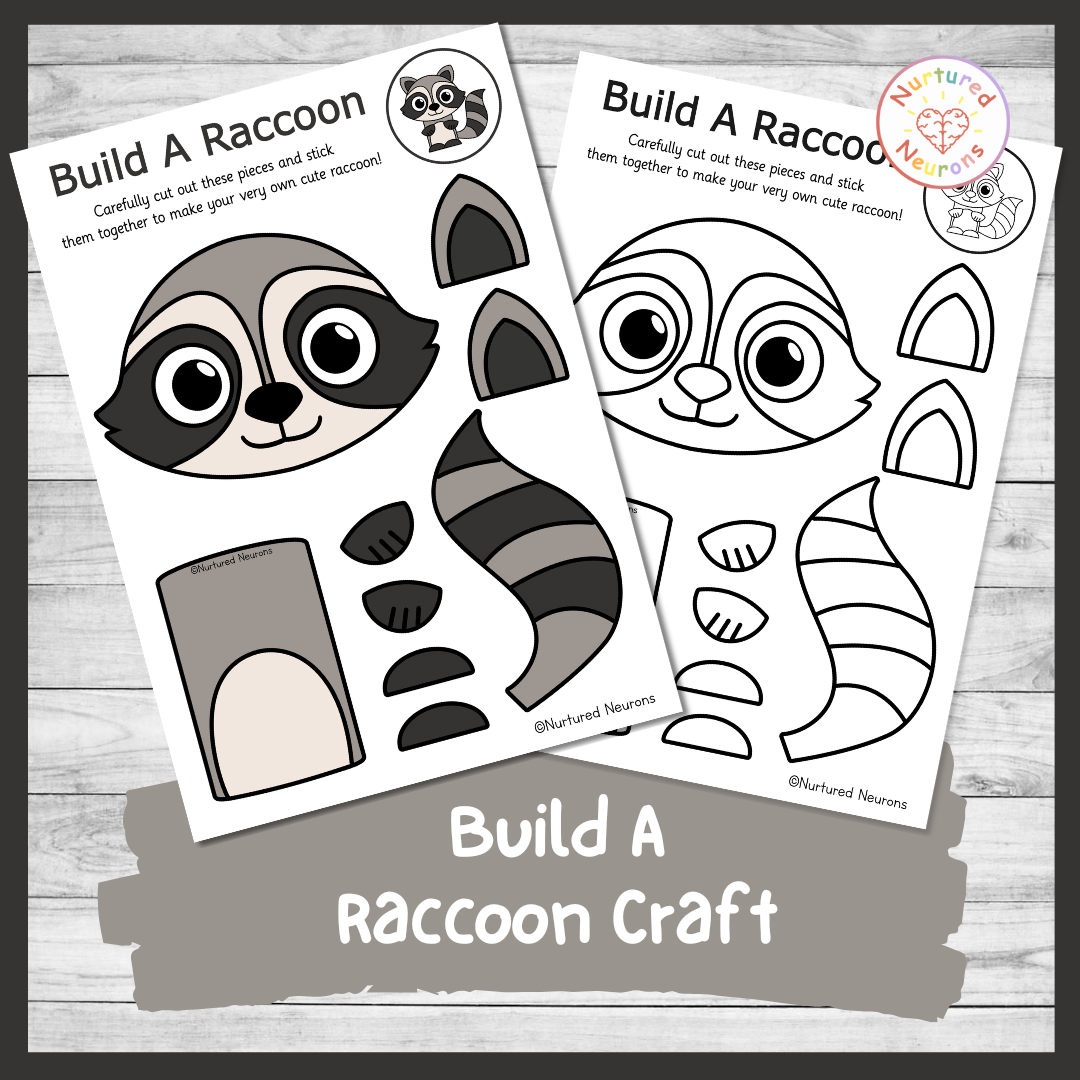
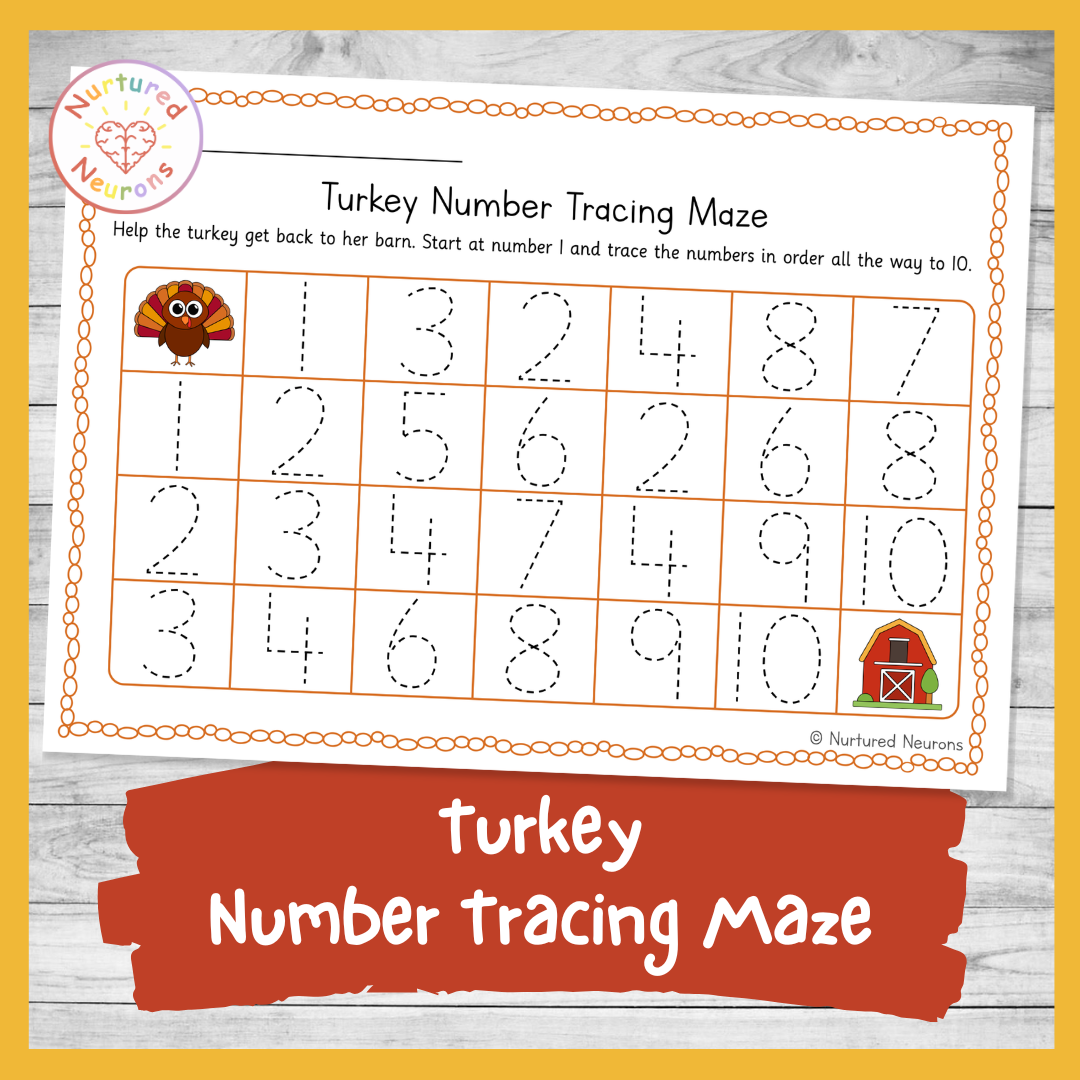
Let’s make Butterfly Education and Awareness Day extra fun for your little learners. Here at Nurtured Neurons, butterfly-themed printables are a lovely way to explore this topic.
These hands-on activities are perfect for building early skills like fine-motor control, matching, counting, sequencing, and vocabulary.
Click on the images below to grab a butterfly-themed activity:


Other Fun Ways to Celebrate
These ideas use everyday materials and work well for classrooms and home learning.
Indoor Activities
Butterfly Movement Story: Tell a simple movement story where your children act out the whole life cycle. Start curled up small as an egg, slowly hatch and crawl as a caterpillar eating, then curl up tight as a chrysalis (no moving or talking!), and finally slowly stretch out and flutter around the room as a butterfly. This is a brilliant brain break that reinforces the life cycle sequence and some builds gross motor skills.
Symmetry painting: cut and fold a paper butterfly shape in half, get your little ones to paint only on one side, fold and press. Open to reveal symmetry – such a satisfying “TA-DA!” moment.
Life cycle actions: Grab a set of the sequencing cards, then get your children to act them out as you hold them up. they could:
- curl up for an egg
- crawl for the caterpillar
- stand straight and wiggle slightly for the chrysalis
- and flap their arms and run about for the butterfly!
Outdoor Activities
Butterfly watch walk: Your little learners can look for butterflies near sunny spots and flowers. Even if you don’t see one, you can look for “butterfly clues” like nectar flowers and warm resting places.
Build a “rest stop”: Put a flat rock in a sunny area and talk about how butterflies warm up in the sun before flying.
Create a mini nectar patch: Even a pot with a few nectar-filled plants is a great start for your children to observe butterflies coming and going.
Ideas from Around the Web

If you’d like a few more ways to celebrate, here’s a few simple ideas from some trusted sites:
Create a butterfly puddle (puddling station) – Kids Gardening has an easy “butterfly puddle” activity using sand + water (and a tiny pinch of salt/compost) to mimic puddling behaviour. Great for science talk and butterfly observation. (Kids Gardening)
Paper circle butterflies – simple low-prep craft with minimal resources. Perfect for some fine motor skills. (Easy Peasy and Fun)
- Plant a butterfly garden – a simple kid-friendly overview of building a butterfly garden (nectar plants + host plants) helps your little ones learn about habitats and what butterflies need to survive. (Butterfly Conservation)
Simple Classroom Display & Group Activity Ideas
Here are some easy ways to bring your butterfly theme to life in a group setting:
Symmetry gallery: if you made the symmetry butterflies mentioned above, get a lovely display going.
“Nectar Stop” role-play game: place paper flowers around the room. Your little learners “flutter” between them collecting pretend nectar (pom-poms or paper circles). You can add simple rules: visit 3 flowers, count to 5 nectar drops, etc. Great for movement + counting.
“Help the Butterflies” idea generation: as a group, create a list titled: “Ways Our Class Can Help Butterflies.” Your children suggest ideas (plant flowers, don’t pick butterflies up, watch gently, leave lots of wild patches etc.). This ties into empathy and responsibility and can reinforce what they have learnt.
Learn About Butterfly Day Reading List – Butterfly Books to Explore Together
Books are such a great way to help your kids learn about butterflies – here’s a few:
The Very Hungry Caterpillar – Eric Carle
A classic transformation story your little learners will adore and it’s got some counting days of the week practice!
Butterfly House – Eve Bunting
A gentle story about caring for a caterpillar and watching it change, with a theme of patience and wonder.
Butterfly, Butterfly (A Book of Colors) – Petr Horáček
A bright, peek-through story where your little learners search the garden for a butterfly while exploring colors.
National Geographic Readers: Butterflies! – Laura Marsh – Bright photos and simple facts for curious little learners who want the real science stuff.
Discussion Starters
These open-ended questions are great for encouraging reflection:
What do you notice first about a butterfly – their color, pattern, size or something else?
Why do you think a caterpillar turns into a butterfly instead of staying the same forever?
If you could design a butterfly, what colors and patterns would it have?
Butterflies can only survive if they have the right plants and flowers nearby. How do you think we can help them?
What was the most interesting butterfly fact you learned today and why?
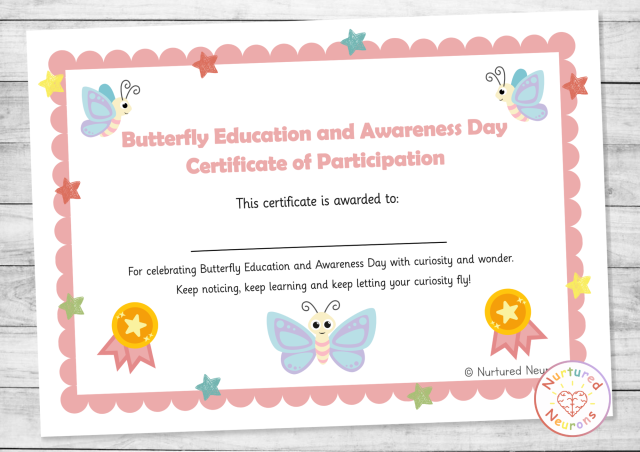
I’ve made a little certificate you can use to help celebrate your learners’ efforts with a cheerful keepsake! I’ve kept it simple as I know too well how time consuming writing the dates and signing a class worth or certificates can be…
Click the button below to download and print a Butterfly Education and Awareness Day Certificate of Participation:
Butterfly Education and Awareness Day Final Thoughts
Butterfly Education and Awareness Day is one of those rare occasions that genuinely works for every kind of learner. Whether your kiddos are fascinated by the science of metamorphosis, the art of symmetrical wing painting, or the simple joy of chasing a fluttering butterflies around the backyard, there’s a lot of fun to be had.
We’d love to know: did your little ones spot any butterflies this BEAD? What was their favorite fact? Leave us a comment below and tell us all about it!
Enjoy!
And if you want to see what other special days are coming up soon – as well as grab a few choice activities – you can check out our Special Day Calendar here.