Halloween is celebrated every year on October 31 and the holiday has deep roots. It grew out of Samhain, an ancient Celtic festival that marked the end of the harvest and the start of winter, when people lit bonfires and wore disguises. Later, the Christian calendar layered All Saints’ Day on top of it, and the evening before became All Hallows’ Eve.
The name itself is nice to breakdown for your little learners. “Hallow” is an old word meaning holy, so All Hallows’ Eve simply meant the evening before All Saints’ Day. Irish and Scottish families brought their traditions with them when they emigrated to the United States in the 1800s, and the fun Halloween celebrations we have now evolved from there.
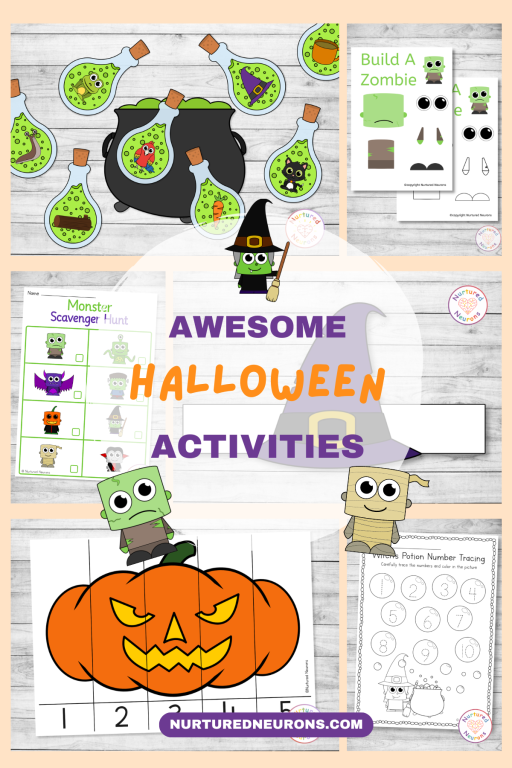
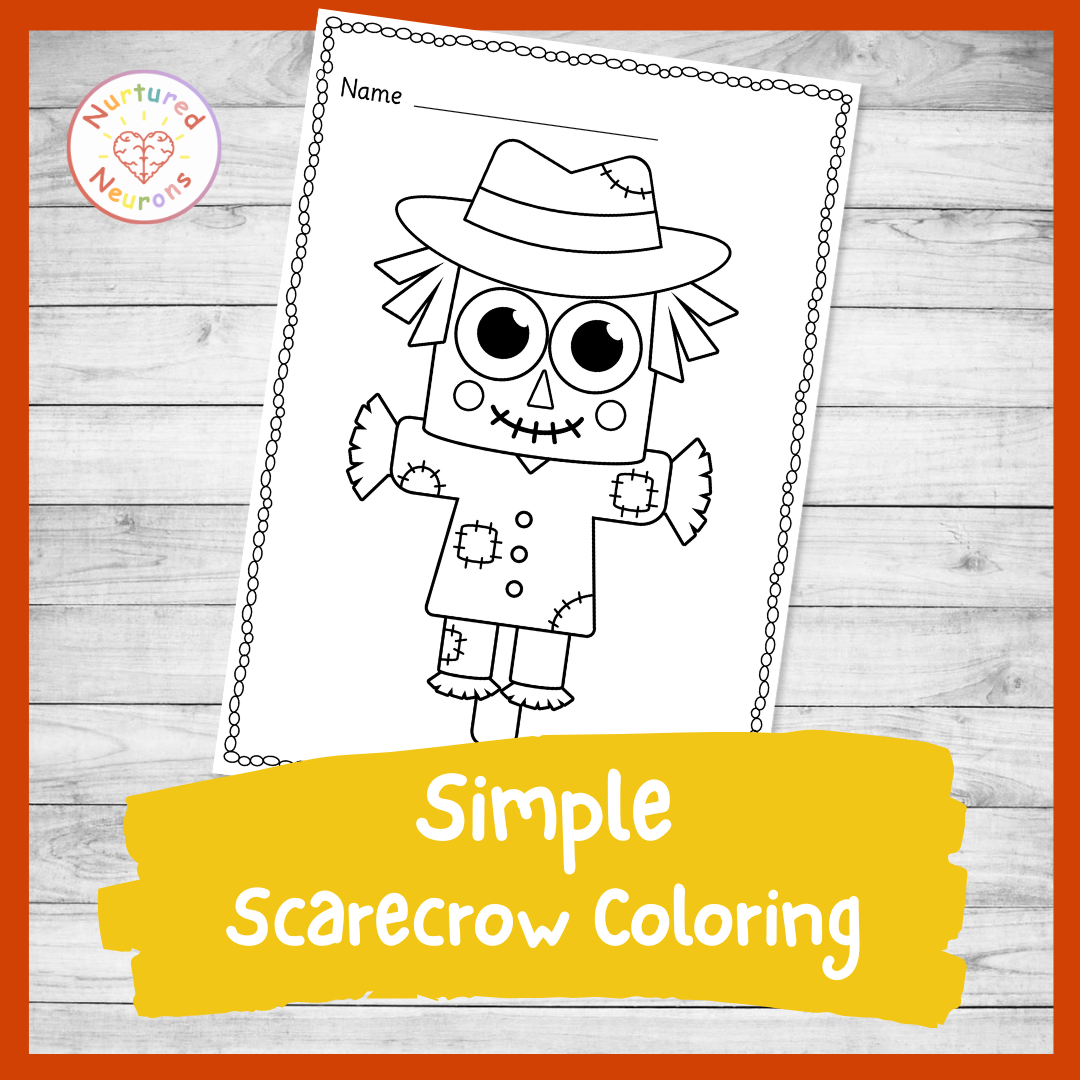
It’s a holiday about light in the dark, dressing up as somebody else for a night, having fun and sharing treats with neighbors. If you’re after some awesome themed resources, our Halloween printables collection has crafts, games, math and phonics activities to check out!
Why Is Halloween Special?
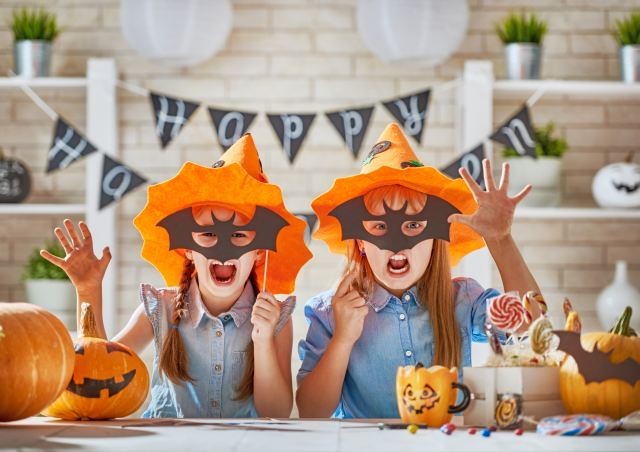
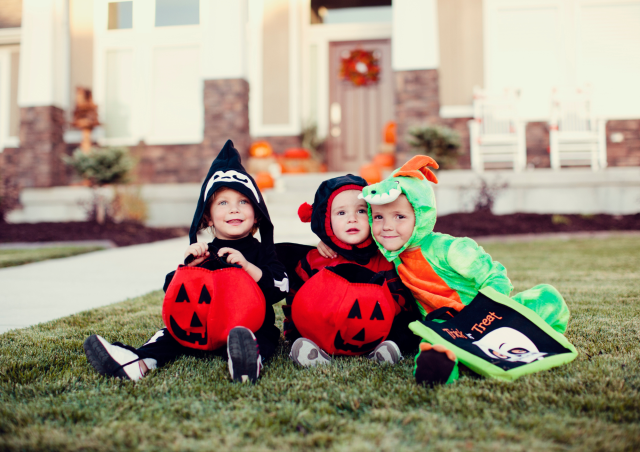
One of the things that makes Halloween special is that it happens outside, in the dark and with your neighbors. Most holidays have everyone indoors with close family and friends. But with Halloween, for a couple of hours, whole streets are out walking around together and people who might just wave at each other normally are having some good old conversation!
And of course, for anyone working with young children, it also happens to be one of the richest days on the calendar for learning.
Learning Opportunities
Halloween is one of the most cross-curricular days on the calendar. Here are some ideas worth having a go at with preschool and kindergarten learners.
Early Literacy and Phonics
Halloween vocabulary is a phonics goldmine. There’s lots of CVC words like bat, web and cat. And then some others that push the reading on a bit – think pumpkin, mask, moon, howl etc. And one of the great things is that children are already excited about them. Our Halloween beginning sounds worksheets are a low-prep way to get some easy phonics practice in.
Number Sense and Counting
Halloween gives you loads of opportunities to count – bats in the sky, seeds in a pumpkin, candies in a jar, which is exactly what your young mathematicians can use for some one-to-one correspondence and early subitizing.
Fine Motor and Pre-Writing
Cutting, threading, sticking, coloring. Almost every Halloween craft is great fine motor practice for those little fingers. Threading is also particularly good because it builds hand strength, bilateral coordination and pincer grasp all at once. A spider lacing card might help there…
Science and the Natural World
Bats, spiders, owls and wolves are all real animals with genuinely fascinating lives, and Halloween can be a great time to reframe them as interesting rather than creepy. Talk about nocturnal animals, echolocation and why spiders build webs. Pair the conversation with a build a bat craft so children have something in their hands while they’re thinking about it.
Social and Emotional Learning
Trick-or-treating can be a surprisingly demanding social task for a four-year-old: approach someone they might not know, make eye contact, ask politely, wait their turn and then accept whatever you’re given without complaining if they don’t like it (hopefully!).
Practicing this and talking about it before can really take the pressure off. It can also be a natural opening to talk about brave feelings versus scared feelings.
Art and Design
Halloween can be a super time for some open-ended art – grab some black paper, white chalk, orange paint etc. and let children design their own monster. As it’s their monster – there’s no right way to do it! They could then describe it to a friend, which will turn this art activity into an oral language activity.
Did You Know?
Here are a few fun Halloween facts to share with your little learners:
The very first jack-o’-lanterns weren’t pumpkins at all. In Ireland and Scotland, people carved scary faces into turnips and other root vegetables, then popped a candle inside. Pumpkins only took over once the tradition reached America, where pumpkins grow everywhere.
The word Halloween is really just a squashed-up version of something much longer. It comes from All Hallows’ Eve, and “hallow” is an old word that means holy.
If you carved a pumpkin this year, there’s a good chance it came from Illinois. The state grows more pumpkins than any other in America – about as many as the next four biggest pumpkin states put together.
The heaviest pumpkin ever grown weighed 2,819 pounds. Wowzers! That’s heavier than most cars, and it measured more than twenty-one feet all the way around.
Bats get a spooky reputation at Halloween, but here’s something awesome about them: they are the only mammals that can truly fly. Flying squirrels only glide. Bats actually fly!
Halloween Jokes
Halloween feels even more fun when your little learners get to laugh a bit. Here’s a few themed jokes you may want to share with your little ones:
- What do you get when you drop a pumpkin? Squash.
- What do witches ask for at hotels? Broom service.
- Why don’t skeletons go on rollercoasters? They don’t have the guts.
- What’s a ghost’s favorite game? Hide and shriek.
- How do you fix a broken jack-o’-lantern? With a pumpkin patch.
Halloween Printable Activities
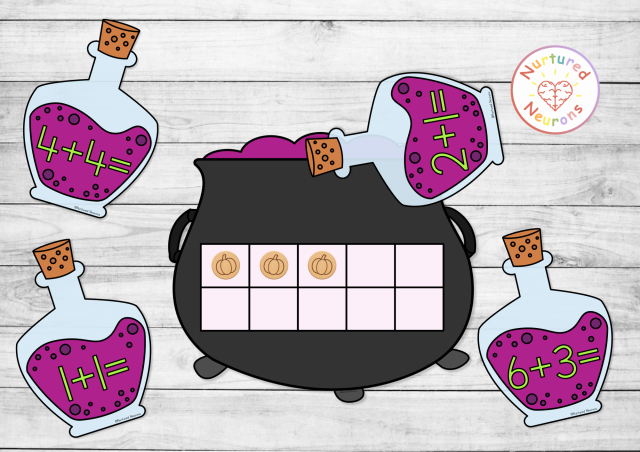
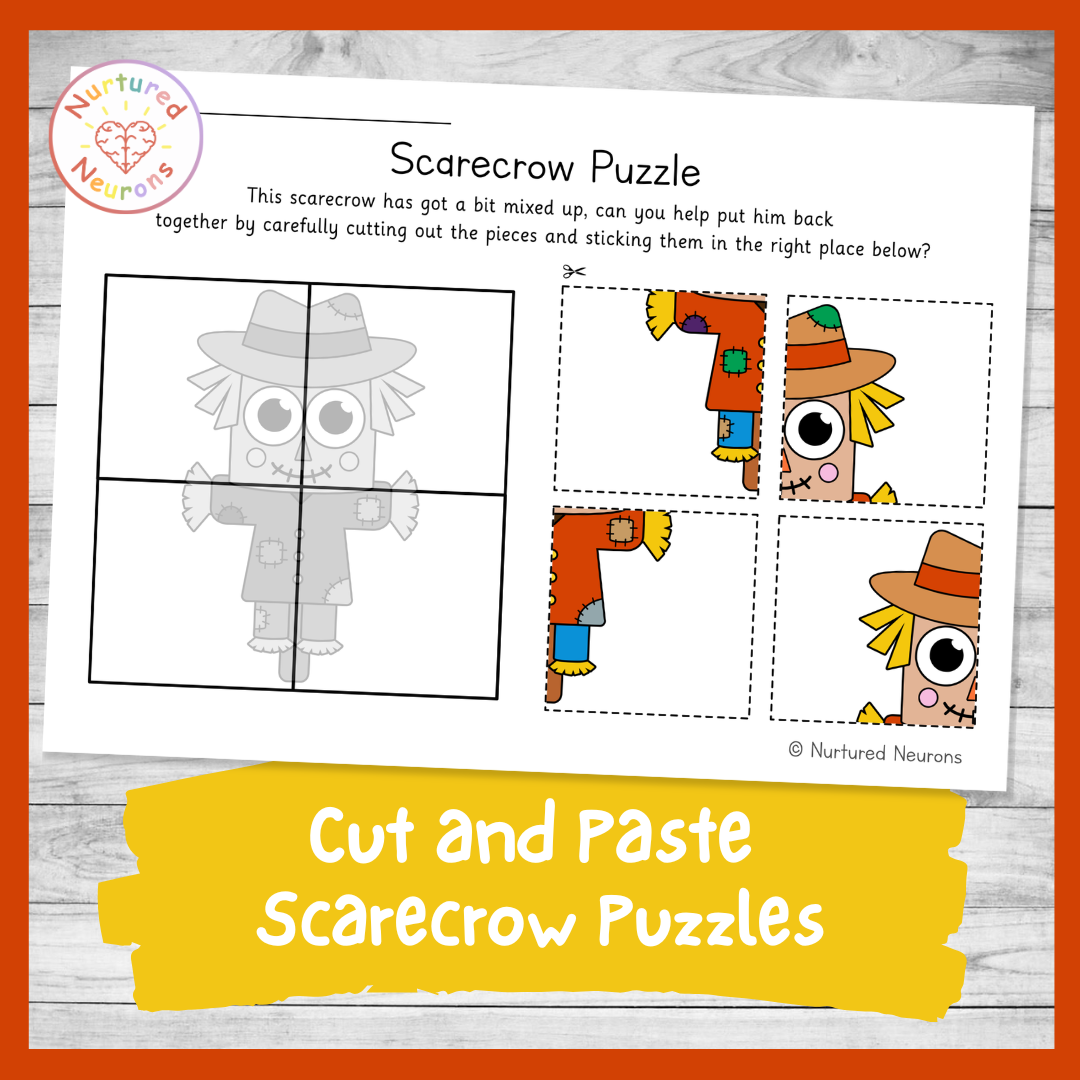
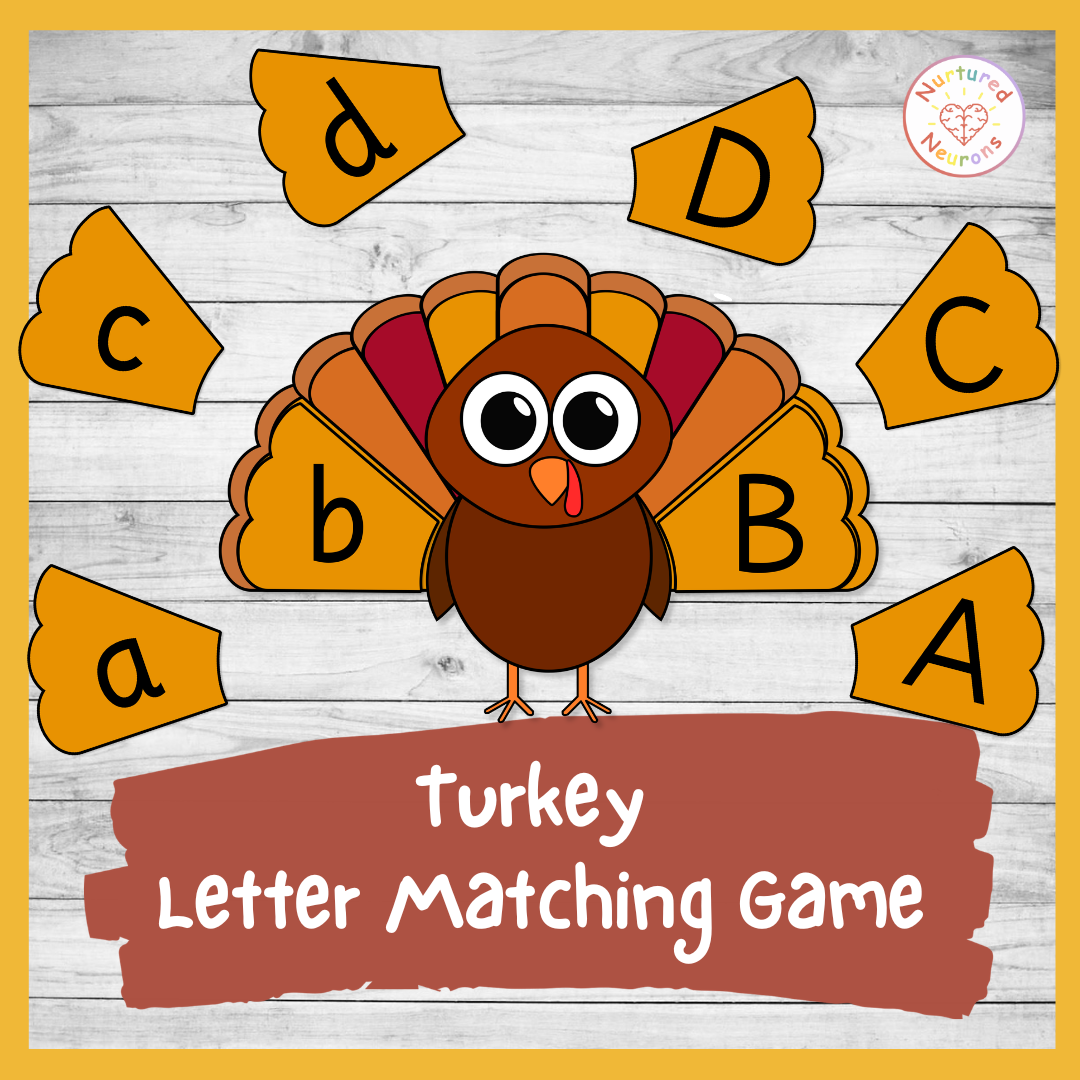
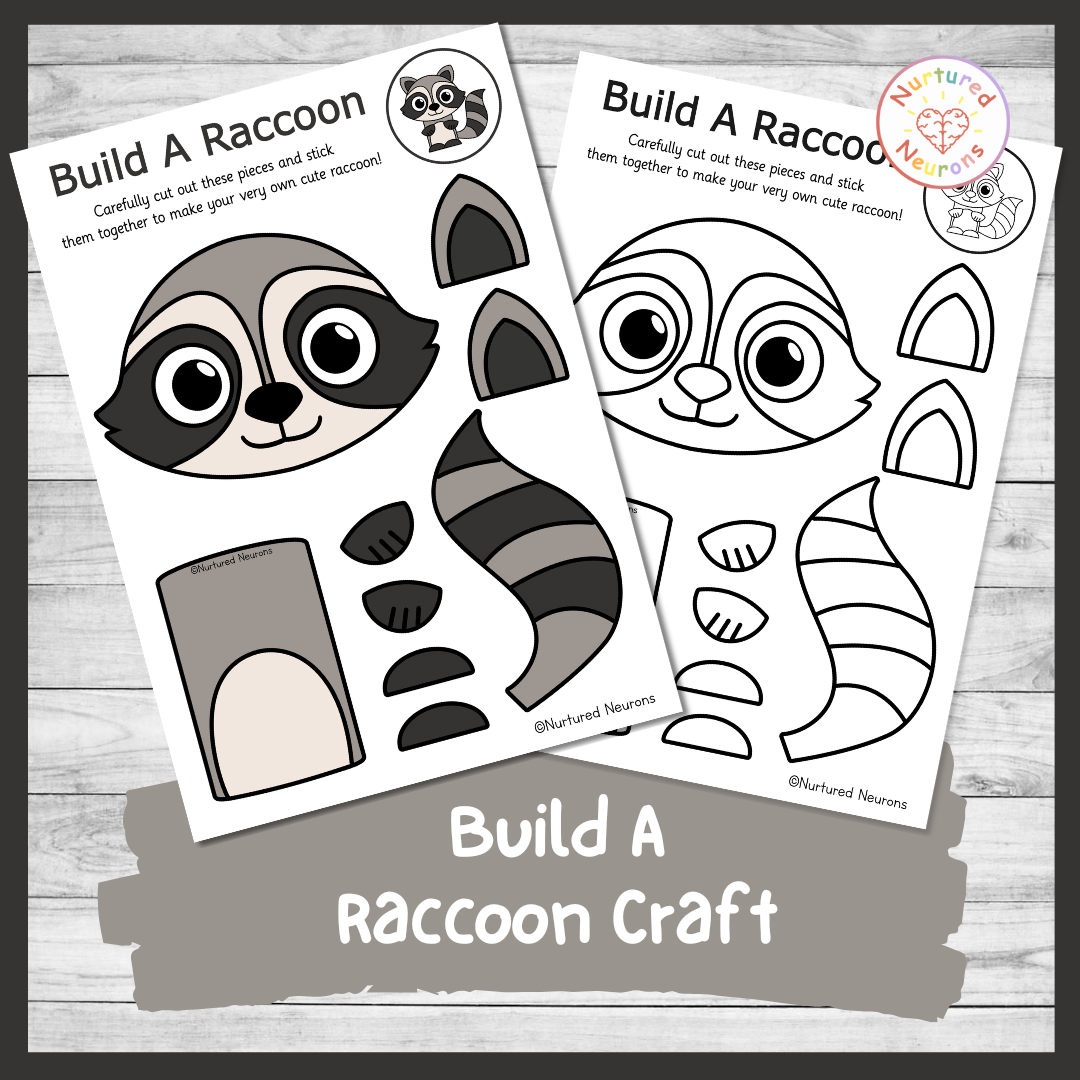
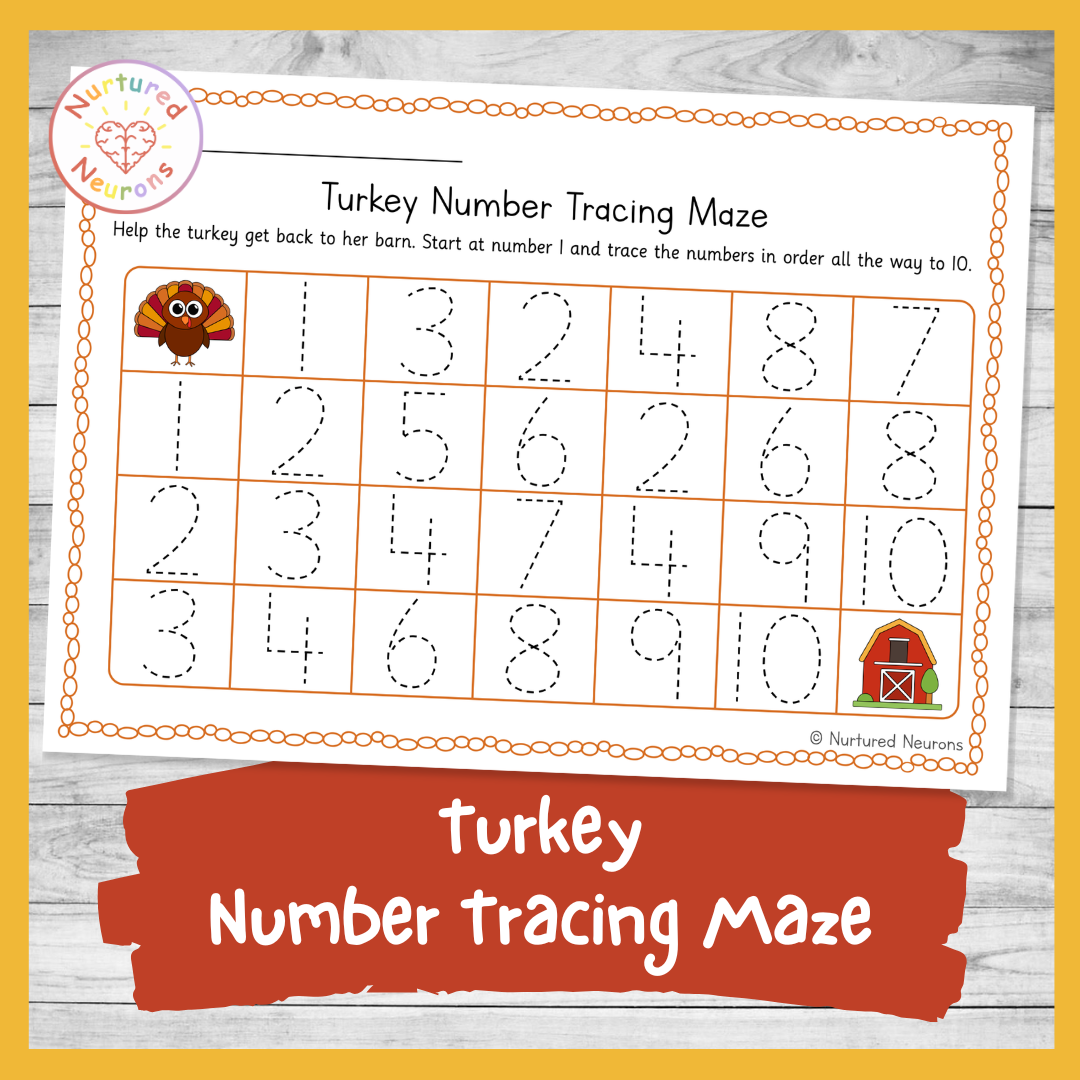
Let’s make Halloween even more fun! Here at Nurtured Neurons, you’ll find loads of spooky print-and-go activities covering counting, beginning sounds, fine motor practice, cutting skills and more.
Click on the images below to grab an awesome Halloween activity:


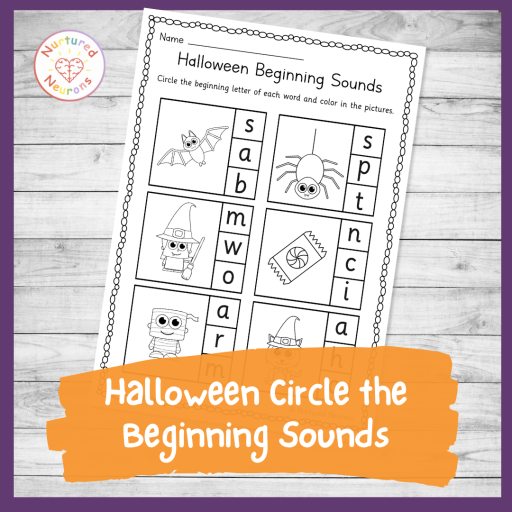
Other Fun Ways to Celebrate
There are so many ways to mark Halloween that need no printer and no special shopping trip. All of the ideas below use everyday materials and work just as well at home as in a classroom.
Indoor Activities
Monster Faces in Playdough
Set out some playdough with googly eyes, pipe cleaners, buttons, pasta shapes etc. as loose parts, then invite children to build a monster face. There’s no right or wrong answer here!
Rolling, squeezing and pressing all build hand strength, picking up small pieces is great for pincer grip and finger control and the open-ended nature of the activity supports creativity and decision-making.
Shadow Puppet Spooky Stories
Tape a white sheet across a doorway or make a frame from an old cereal box, shine a lamp behind it and let children make bat, cat and ghost shapes with their hands or with some cut-out shapes on sticks. Encourage them to tell a story and it’s great for storytelling, sequencing and imaginative play.
Pumpkin Guts Investigation Tray
Nice sensory one, this. Scoop the insides out of a pumpkin onto a large tray and let children go in with their hands.
Ask them to describe what they feel: cold, stringy, slippery, bumpy. Then count the seeds in small groups of ten. This one builds descriptive vocabulary, fine motor skills and early counting all at once.
Once the seeds are dry, they’d be great to use as real life manipulatives with these pumpkin ten frames!
Outdoor Activities
Spider Web Hunt
Head out on a damp morning when webs are easiest to spot and see how many you can find. Look at the shapes and talk about how a spider builds one without any hands. Encourages close observation, counting and might make your little ones feel a bit differently about this often feared creature.
Chalk Skeleton Outlines
One child lies down on the sidewalk while a partner traces around them, then together they add chalk “bones” inside the outline. A brilliant chance for a bit of anatomy talk and cooperation.
Leaf Monster Faces
Collect fallen leaves, sticks, pebbles and seed pods, then arrange them on the ground into monster faces. It’s just a super-easy invitation to create that builds some spatial reasoning and creativity.
Ideas from Around the Web
If you’d like a few more ways to celebrate, here’s a few simple ideas from some trusted sites:
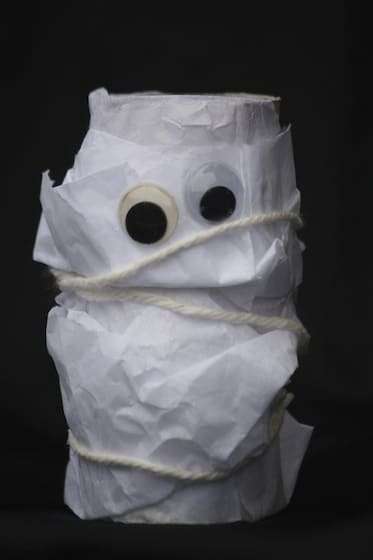
Toilet Roll Mummies – A wonderfully simple mummy craft that takes nothing more than a cardboard tube, a bit of torn tissue paper and a pair of googly eyes. There’s lots of wrapping and winding for little fingers along the way! (Happy Hooligans)
Feed thePumpkin – A recycled container becomes a hungry jack-o’-lantern that children post pom poms into. Fine motor and counting!
- Halloween Snacks – Banana ghosts and clementine pumpkins are some easy themed snacks that your children can assemble almost entirely by themselves. (One Little Project)
Simple Classroom Display & Group Activity Ideas
Here are some easy ways to bring your Halloween theme to life in a group setting:
Collaborative Jack-o’-Lantern Mural
Cut one enormous pumpkin shape from paper, design the face together as a group and then let the whole class fill the remaining space however they like. A lovely display piece when they’re done.
Class Estimation Jar
Fill a clear jar with candy corn, mini pumpkins or plastic spiders etc., and have each child write or dictate a guess. Count it out together at the end of the day.
Real or Make-Believe?
Hold up pictures (or show on the screen) one at a time: a bat, a vampire, a spider, a ghost, an owl, a witch etc. Children can talk with a partner about whether it’s real or make-believe, then you could vote as a group. Brilliant for reasoning, discussion and hopefully allaying a few fears.
Halloween Reading List –
Halloween
Books to Explore Together
Books are a beautiful way to bring Halloween to life, whether as a calm wind-down or a lively morning introduction. Here’s a few:
Room on the Broom – Julia Donaldson
I expect you know this one but if not – a witch keeps making room on her broomstick for one more animal friend, until the whole thing snaps. The rhyme is great and has a lovely message about kindness.
The Little Old Lady Who Was Not Afraid of Anything – Linda Williams
Absolute classic Halloween book here! A repetitive, noisy story that children love joining in with. Fantastic for sequencing, retelling and joining in.
Big Pumpkin – Erica Silverman
A witch grows a pumpkin so enormous that nobody can budge it, not the ghost, not the vampire, not the mummy. In the end it takes the smallest creature of all to solve it… Lovely little story for talking about teamwork.
Halloween Is… – Gail Gibbons (non-fiction)
A clear introduction to where Halloween traditions actually came from, including the jack-o’-lantern story.
Discussion Starters
A few well-chosen questions can turn a simple activity into a rich conversation that builds language and thinking skills. Here are some open-ended starters to use with your little learners around Halloween:
- If you could dress up as absolutely anything at all, what would you choose and why?
- Some people think bats and spiders are scary. What do you think, and what makes you think that?
- What’s the difference between something that’s spooky-fun and something that’s scary?
- If you were a ghost for one day, where would you go first?
- What would you carve into a pumpkin if you could carve anything you wanted?
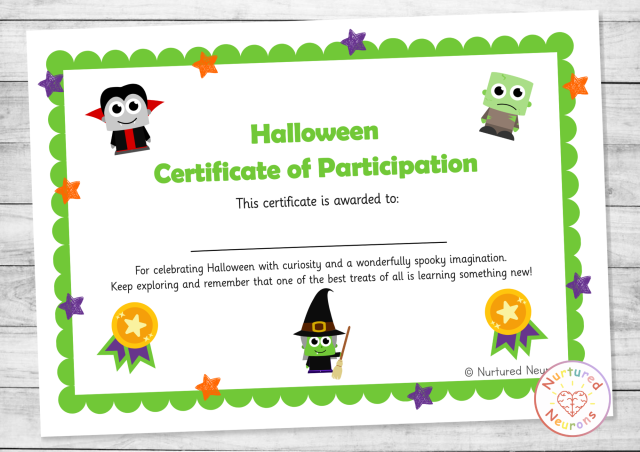
I’ve made a little certificate you can use to help celebrate your learners’ efforts with a cheerful keepsake! I’ve kept it simple as I know too well how time consuming writing the dates and signing a class worth or certificates can be…
Click the button below to download and print a Halloween Certificate of Participation:
Halloween Final Thoughts
Halloween is a great day to get in some fun learning! Whether your little learners are scooping out pumpkin guts, hunting for spider webs on a damp morning or practicing their trick-or-treat manners on a row of pretend front doors, they’re building vocabulary, curiosity, fine motor strength and a bit of social confidence along the way.
And behind all the costumes and the candy, it’s a holiday about light in the dark and sharing something with your neighbors, which is a lovely thing to send children off with.
And if you want to see what other special days are coming up soon, as well as grab a few choice activities, you can check out our Special Day Calendar here.
Enjoy!