What Is Be Kind to Spiders Week?
Be Kind to Spiders Week is an annual awareness week celebrated every year during the first week of April (April 1–7).
It’s dedicated to changing the way people think about spiders – thinking about moving away from the fear and misunderstanding that so often surrounds these eight-legged creatures and toward genuine appreciation.
For young children, it’s a wonderful opportunity to build curiosity, empathy, and a love of the natural world before any misconceptions may take hold.
The week was established in 2003 by the American Tarantula Society, with the goal of promoting a better understanding of spiders and shining a light on their essential role in nature.
Their mission was simple: help people pause before squashing a spider, and encourage a spirit of gentle curiosity instead.
Since then, the week has spread widely, celebrated by educators, naturalists, and spider enthusiasts around the world. Each April, people are encouraged to learn something new about spiders, share that knowledge with others, and – if you find one in your home – to relocate it carefully outside rather than harm it.
Although it’s already happened this year, you may also want to check out Save a Spider Day. for some activities and concepts that will still be relevant – or just bookmark it for next year!
Why Is Be Kind to Spiders Week Special?

For your little learners, spiders offer a perfect window into the natural world. They are everywhere – in gardens, the house, in the corners of classrooms – and yet they are often shooed away or squashed before children get a chance to look closely and be amazed.
Be Kind to Spiders Week is a brilliant invitation to slow down, look carefully and discover just how extraordinary these tiny creatures really are.
It is also a chance to get some gentle conversation going about kindness to the living world all around them. Children who grow up learning to notice and respect small creatures tend to carry that sense of wonder and care with them for life.
Learning Opportunities
Be Kind to Spiders Week is a wonderful time to help your children discover one of nature’s most fascinating and misunderstood creatures.
It’s also a great chance to build scientific observation skills, early empathy and care for living things, vocabulary and some genuinely jaw-dropping “wow” moments that children will talk about for weeks.
Here are a few key areas children can explore:
Spider Science: Webs, Silk, and Engineering
One of the most magical things about spiders — and one that captures children’s imaginations instantly is their silk. All spiders can produce silk, and it is extraordinary stuff: stronger than steel of the same weight, incredibly stretchy, and used in multiple clever ways.
Spiders use silk to build webs, wrap their eggs, line burrows, create safety lines when they jump, and even to travel using a behaviour called “ballooning,” where spiders release silk threads into the wind and float through the air to new locations.
You can introduce this idea to your little learners simply by showing them a spider web in the garden or classroom and asking: “How do you think a spider builds this? What do you think the silk feels like? How long do you think it takes?” These questions build scientific curiosity and early engineering thinking, setting the stage for hands-on web-weaving activities too.
Habitats and Where Spiders Live
Spiders are truly one of the world’s most widespread animals. They’re found on every continent except Antarctica, in habitats as diverse as rainforests, deserts, meadows, caves, and even, yes, the corners of our own homes.
Helping your little learners understand that spiders are part of almost every ecosystem introduces important early ecology concepts – every creature has a home, and every creature has a role to play.
You can explore this together by looking for spiders in different areas e.g. under leaves, in long grass, on fences, in corners, up treese etc. and talking about why a spider might choose each spot.
This kind of close, careful observation is a cornerstone of early science learning, and children who approach nature with curiosity rather than fear discover a world that is absolutely full of wonder.
Food Chains and Web of Life
One of the most important things children can understand about spiders is that they are incredibly helpful!
Spiders are natural pest controllers, eating enormous quantities of insects every year including many that carry disease or damage garden plants (think mosquitoes, flies, and aphids).
Without spiders, insect populations would swell dramatically, and ecosystems would be thrown out of balance – “Spiders help keep our gardens healthy by eating bugs that would eat all all the flowers.”
This positions spiders as garden helpers and friends, which they truly are, and helps children make sense of why we might choose to gently move a spider outside rather than harm it.
Kindness, Empathy, and Overcoming Fear
Perhaps the most powerful learning opportunity in Be Kind to Spiders Week isn’t scientific at all – it’s emotional.
Many children pick up a fear of spiders from the adults around them before they’ve had any real reason to be afraid themselves.
This week is a beautiful chance to model calm curiosity, to say “let’s have a look” instead of “get away from that!” and to show your little learners that most spiders are completely harmless and genuinely fascinating. Obviously if you have venomous spiders in your area, you may need to come at this differently!
Activities that involve looking closely at pictures of spiders, learning their names, or gently relocating a spider in a jar can all help children build confidence and empathy toward creatures they might initially find scary.
Did You Know?

Here are a few fun spider facts to share with your little learners:
Spider silk is stronger than steel! When you compare threads of the same weight, spider silk beats steel for strength and it’s also incredibly stretchy. Scientists are studying it to see how it might be used for things like medical stitches and super-strong fabrics.
Some spiders can “fly” using their silk! Young spiders (called spiderlings) can climb to a high point, release thin silk threads into the wind, and float through the air to a new home. This is called ballooning or kiting, and spiders have been found floating more than two miles above the ground! Wowzers!
Jumping spiders can jump up to 50 times their own body length! They use a clever method which involves pumping fluid through their legs like a little hydraulic machine to spring into the air. They also attach a silk safety line before they jump, just in case!
Not all spiders build webs to catch food. Less than half of spider species build the classic round sticky web. Others, like wolf spiders and jumping spiders, actively hunt and chase their prey – more like tiny tigers!
Spiders have been found on every continent on Earth except Antarctica! There are over 49,000 known species of spiders, and they live in habitats as different as rainforests, deserts, caves, gardens, and our own homes. In some parts of Australia, people have reported seeing millions of spiderlings ballooning at once, leaving the ground covered in silk that looks like snow!
Be Kind To Spiders Week Jokes
A spider theme day feels even more fun when your little learners get to laugh along with it. Here’s a few themed jokes you may want to share with your little ones:
- What do you call a spider with 8 eyes? (i)? A spiiiiiiiider!
- What do spiders order with their burgers? French flies!
- Why do spiders live in haunted houses? Because ghosts can’t break their webs!
- How tall is a spider? Eight Feet!
- When did the fly fly? When the spider spied her!
Be Kind to Spiders Week Printable Activities

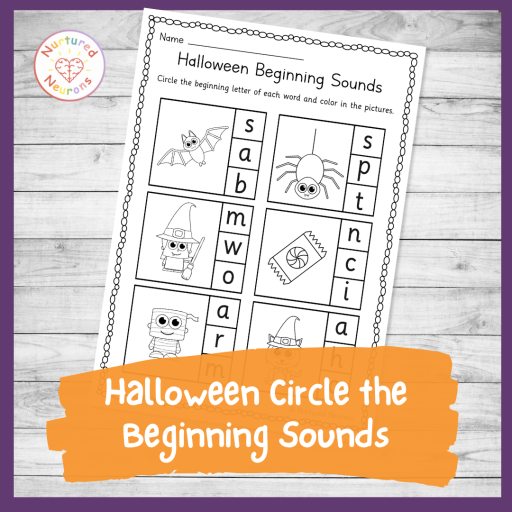
Be Kind to Spiders Week is such a great theme for some hands-on learning and our printable activities are designed to make it easy to bring the magic of spiders into your classroom or home.
The activities support a wide range of early skills – including counting and number recognition, letter and phonics work, matching and sorting, fine motor development, early reading and more.
Click on the images below to grab a spider-themed activity:


Other Fun Ways to Celebrate
There are so many wonderful ways to mark Be Kind to Spiders Week that don’t require a special trip or a big budget! Many of the ideas below are low-prep, use everyday materials and work well in a classroom or at home.
Indoor Activities
Spider Silk Weaving with Sticks and Yarn: Gather three straight sticks (or use popsicle sticks) and secure them together at the centre so they fan out like a star. Children then wind coloured yarn around and between the spokes, weaving outward from the centre to create their own “spider web.” Talk with them about how a real spider starts at the centre and works outward, adding silk thread by thread.
This builds fine motor skills, hand-eye coordination, and a wonderful appreciation for what spiders actually do.
Build a Spider: Playdough Making Station: Set out black (or any colour to be fair) playdough alongside pipe cleaners and some googly eyes. Children roll, squash, and mould their own spider bodies and press in eight legs, googly eyes and any other features they fancy.
Encourage them to name their spider and decide where it lives. This builds fine motor strength, creativity, and early science vocabulary as they talk about their creation.
This web playdough mat would work great here.
Spider Web Yarn Painting:
Pour a small amount of white paint into a shallow dish and dip lengths of yarn into it. Children drag, press, and drop the yarn onto black construction paper to create their own spider web patterns.
Display the finished pieces as a class spider web gallery.
Outdoor Activities
Spider Web Hunt with Magnifying Glasses: Head outside with magnifying glasses and challenge your little learners to find as many spider webs as they can.
Look under leaves, along fence posts, between plants, in the corners of walls, and near the ground in long grass. Photograph webs if you can and compare the different shapes and sizes.
Talk about which spiders might have made each web and why they chose that spot. This builds observation, vocabulary and a wonderful sense of curiosity about the world right on your doorstep!
Spider Web Building with Sticks and String: Gather a bundle of short sticks or twigs and a ball of garden string or wool. Children work together (or individually) to weave a web between the sticks, inspired by real spider webs they’ve spotted outside.
This outdoor STEM activity builds problem-solving, fine motor dexterity, and cooperative working skills.
The Spider and Flies Game: Choose a spider, they start in the middle of the web – all other ‘flies’ line up at one side of the playing area. Flies need to run from one end of the space to the other and spiders try to tag them as they pass through the “web”.
Rather than being eaten, with this game, any tagged fly also becomes a spider. See how long it takes for all the flies to be caught!
Afterward, talk about how real spiders wait patiently for insects to come to them. This game builds gross motor skills, teamwork and strategic thinking.
Ideas from Around the Web

If you’d like a few more ways to celebrate, here’s a few simple ideas from some trusted sites:
Popsicle Stick and Yarn Spider Web Craft – Three popsicle sticks are glued into a star shape, then children wind yarn between the spokes to create a woven web. Simple, satisfying and a wonderful way to develop hand strength and hand-eye coordination. (Buggy and Buddy)
Rescue the Spiders Sensory Bin – Fill a tray with coloured rice, lay string webs across the surface, and hide plastic spiders underneath. Children use tools to rescue and count the spiders. A wonderful fine motor and counting activity that’s also great imaginative play. (Messy Little Monster)
- The Very Busy Spider Web Craft –Using a paper plate with punched holes around the edge, children thread yarn back and forth to create their own spider web. Directly connected to Eric Carle’s classic book. (The Crafting Chicks)
Simple Classroom Display & Group Activity Ideas
Here are some easy ways to bring your spider theme to life in a group setting:
Our Spider Kindness Pledge: Each child draws or paints a spider and writes or dictates one kind thing they will do for spiders (leave webs alone, catch and release a spider rather than squash it, put their rubbish in the bin etc.). Displayed together, this makes a warm, meaningful class pledge wall that children can refer back to all week.
“Is It a Spider or an Insect?” Sorting Game: Hold up pictures of different creatures one at a time and ask children to vote: spider or insect? Count the legs together before separating them into piles. A great chance to talk about different animal features.
Move Like a Spider: Talk through a spider’s day and invite children to act it out as you go. Waking up carefully in their silk shelter, stretching each leg (count them out!), tiptoeing across a web, sensing a vibration, FREEZE – there’s something on the web! Pouncing, wrapping the prey in silk ready to eat. This body movement activity builds imaginative thinking, sequencing, and spider knowledge.
Be Kind to Spiders Week Reading List – Spider Books to Explore Together
Books are one of the most powerful tools you have for bringing any theme to life – here’s a few:
The Very Busy Spider – Eric Carle
A calm, reassuring story about a spider building her web while farm animals try to distract her.
Diary of a Spider – Doreen Cronin
A funny spider diary that helps your children see spiders as more relatable than scary.
Walter’s Wonderful Web – Tim Hopgood A sweet story about a spider experimenting with shapes to make the best web — great for early math language too.
I’m Trying to Love Spiders – Bethany Barton – A funny and engaging non-fiction book packed with spider facts!
Discussion Starters
A well-placed question can turn a simple activity into a rich, memorable conversation. Here are some open-ended discussion starters to use with your little learners during Be Kind to Spiders Week.
What do you think it would feel like to walk on eight legs?
If you found a spider in your home, what would you do? Why?
Why do you think some people are scared of spiders? Do you think that’s fair to the spider?
If you could design a spider with a superpower, what would it be and how would it use it?
What do you think is the most amazing thing about spiders — and why?

I’ve made a little certificate you can use to help celebrate your learners’ efforts with a cheerful keepsake! I’ve kept it simple as I know too well how time consuming writing the dates and signing a class worth or certificates can be…
Click the button below to download and print a Be Kind to Spiders Week Certificate of Participation:
Be Kind to Spiders Week Final Thoughts
What a brilliant week to share with your little learners! Be Kind to Spiders Week is a wonderful reminder that kindness doesn’t stop with the people around us, it stretches out into the natural world, all the way to the smallest and often overlooked creatures.
Whether you spent the week hunting for webs in the garden, weaving with sticks and yarn, reading The Very Busy Spider for the fifth time, or gently relocating a house spider in a jar, you’ve helped your children see the world with more curiosity, more care, and a little more wonder.
We’d love to hear how your little learners got on! Did the ballooning fact blow their minds? Did anyone discover a real spider web and stop to admire it? Share any favourite moments in the comments below – we love hearing from you!
Enjoy!
And if you want to see what other special days are coming up soon – as well as grab a few choice activities – you can check out our Special Day Calendar here.